Early Orthodontic Treatment | Merrimack and New Boston, NH
If your seven- or eight-year-old's teeth are coming in crooked, crowded, or just plain odd-looking, you're probably wondering whether to do something now or wait it out. That's exactly what an early orthodontic evaluation is for. Dr. Hernandez and the team at River Orthodontics check kids around age 7, spot anything that needs attention while the jaw is still growing and flexible, and tell you plainly whether the answer is treat, watch, or wait.
Age 7 is a good checkpoint because enough permanent teeth have arrived to show us patterns, while enough growth remains to guide them. Families come to us from across Merrimack, New Boston, and the surrounding towns for that first look. You can come in, ask every question on your mind, and leave without any obligation. Call (603) 424-1199 whenever you're ready.
Quick Takeaways
- The AAO recommends a first evaluation by age 7, and we follow that same guidance because enough permanent teeth have arrived to show us patterns while enough growth remains to act on them.
- Most kids who come in at this age leave without braces and get monitored instead. We watch how things develop at check-ins and only step in when the timing is actually right.
- When you come in, it helps to have two questions ready: what are you seeing, and what happens if we wait? You should leave with clear answers to both.
- When early treatment is needed, guiding jaw growth now can make later treatment simpler and shorter, and we walk you through every option before anything begins.
Signs Your Child May Benefit from an Early Look
Most parents don't think about orthodontics until a tooth comes in visibly sideways. But the things that respond best to early care are often quieter than that. They show up at the dinner table or during sleep more than in the mirror.
Any of the following is a good reason to come in for a closer look:
- Teeth coming in crowded, overlapping, or clearly out of position
- An underbite, where the lower teeth sit in front of the upper ones when your child bites down
- A crossbite, where the upper and lower teeth don't line up side to side
- Thumb sucking or pacifier use continuing past age 5
- Mouth breathing, especially during sleep
- Baby teeth falling out much earlier or much later than their friends'
- Trouble chewing, or skipping certain foods because their teeth don't meet well
- A jaw that shifts to one side, or clicks when they open and close
None of these means your child needs braces tomorrow. They're simply the patterns that are much easier to correct at 7 or 8 than at 13, when the growth we'd want to work with is mostly done. If something has been nagging at you, one visit is all it takes to get a clear answer. Dr. Hernandez will walk you through what he sees, and if the answer is "nothing yet," he'll say that too.
What Happens at the Evaluation
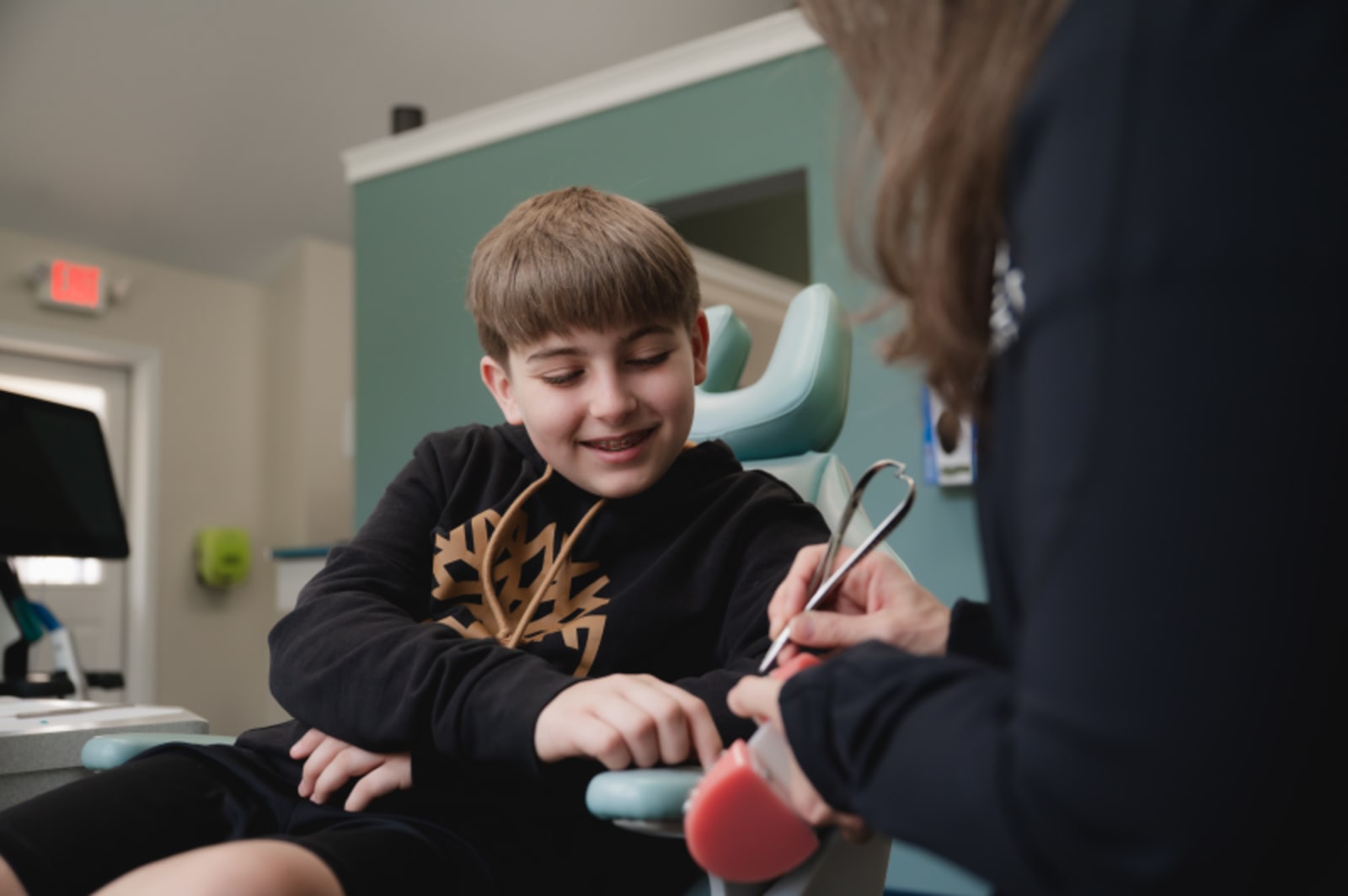
1. We start by listening
You tell us what you've noticed and what's been on your mind. If your child is nervous, we keep things light because laughter does more for a hesitant kid than any explanation we could give.
2. A comfortable digital scan
Instead of goopy impression trays, our iTero scanner takes a detailed 3D picture of your child's teeth in minutes using a small wand that moves around the mouth without anything to swallow or gag on.
3. Imaging to see the full picture
X-rays and 3D imaging let us see what's happening under the gums: permanent teeth still forming, how they're angled, and whether any are blocked from coming in. This is where early problems usually hide.
4. Dr. Hernandez examines and explains
Dr. Hernandez looks at how the teeth are coming in, how the upper and lower jaws fit together, and how the bite works. Then he walks you through what he's seeing on the screen in plain language so you can see it too.
5. You leave with a clear recommendation
- Start Phase 1 now, because something specific is easier to correct while your child is still growing.
- Keep an eye on it, meaning we check in every six to twelve months and track how things develop before deciding anything.
- Wait for the permanent teeth, because nothing urgent is happening and treating later is the smarter move.
What Early Treatment Can Actually Do
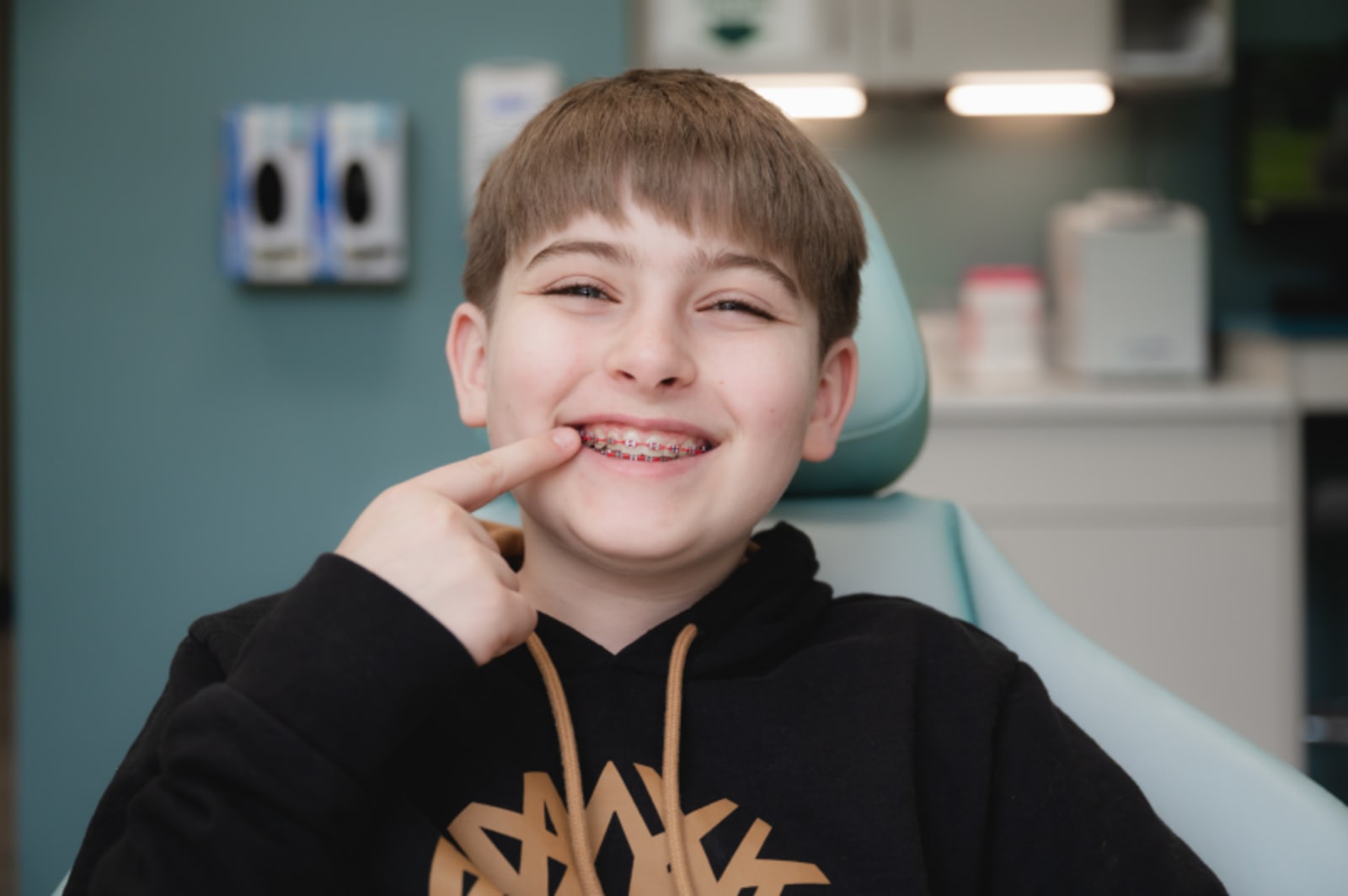
Phase 1 is not a head start on braces. It is a different kind of treatment with different tools, focused on problems that only respond well while a child is still growing:
- Guide jaw width and growth. An expander gently widens a narrow upper jaw while the bones are still soft and easy to influence. Waiting until the jaw is fully grown often means a much more involved fix.
- Make room for permanent teeth. Creating space early can reduce crowding and, in some cases, lower the chance that a permanent tooth gets stuck or has to be removed.
- Correct crossbites and underbites. These affect how the jaws develop over time, not just how the teeth look today, and they get harder to correct as a child gets older.
- Protect teeth that stick out. Front teeth that protrude are more likely to chip or break during sports and everyday play. Moving them into a safer position while your child is young reduces that risk significantly.
- Break habits that are changing the bite. Long-term thumb sucking can shift how the front teeth and the roof of the mouth develop. Dr. Hernandez uses gentle, supportive approaches to help a child move past the habit.
- Simplify what comes next. When the foundation is right, Phase 2 (usually braces or Invisalign in the early teens) tends to be shorter and more straightforward.
There is a confidence piece to this too. Kids whose teeth stick out or whose jaw shifts when they bite usually know it. By the time Phase 2 comes around, they are already figuring out who they are. Addressing the problem earlier, calmly and without making it a big deal, gives them one less thing to carry.
Timeline: What the Commitment Looks Like
The evaluation
The evaluation is a single visit, and you leave the same day with a recommendation and, if treatment is advised, a clear picture of what it involves. Dr. Hernandez walks you through everything in plain language at our New Boston or Merrimack office.
Active Phase 1
Active treatment usually runs around 12 to 18 months depending on what's being corrected, and because check-in appointments are spaced out, it fits into a normal family schedule without much disruption.
The resting period
After the appliance is removed, we let things settle and keep watching as the remaining permanent teeth come in. This stretch can last a couple of years, with periodic visits.
Phase 2, if needed
If Phase 2 is needed, it typically means full braces or clear aligners in the early teens once all the permanent teeth are in. Some kids need it and some don't, and we won't know for certain until the resting period wraps up.
Preparing for the Visit and Caring for the Results
Before you come in, jot down what you've noticed and when it started, and bring any recent dental x-rays your family dentist has taken. Tell your child it's a look-and-talk appointment, nothing more, because kids handle new places better when nobody oversells them.
If Phase 1 begins, the daily routine is very manageable. Palate expanders are adjusted on a simple schedule we'll walk you through, and the first few days feel a little strange before they feel normal. Brushing takes a bit longer around any appliance, and sticky or hard foods come off the menu for a while. Once active treatment ends, a retainer holds everything in place while growth continues. How consistently your child wears it is what determines whether the result holds.
If you have questions about cost or scheduling at any point, we'll go over all your options before anything starts.
Cost and Payment For Early Orthodontic Treatment
Phase 1 pricing varies by child, depending on which appliance is recommended, how long active treatment runs, and what's being corrected. We walk you through the numbers at your consultation and answer every question before you commit to anything. We'll also cover payment and financing options so the plan works for your family, not just your child's teeth.
Parents often ask whether starting early saves money, and the truthful answer is that it really depends on what's going on. If your child has a jaw or bite issue that's easier to fix while they're still growing, handling it now can mean simpler, shorter treatment later and sometimes avoids a bigger correction down the road. If there's no real issue to address, waiting is the better move, and we'll tell you so before anything starts.
Why Merrimack and New Boston Families Choose Us

Dr. Emilio Hernandez earned his dental degree at the University of Kentucky, where he received the Clinical Achievement Award for Excellence in Restorative Dentistry. He spent four years practicing general dentistry in Hawaii, taught full-time at NYU's dental residency program, and then completed a three-year orthodontic specialty program at Nova Southeastern University, where he earned his certificate and Master of Science in Orthodontics. Since then, orthodontics is the only thing he focuses on at his practice.
Frequently Asked Questions
My child is 7. Is it really necessary to come in this early?
You probably don't need to start treatment yet, but the visit itself is genuinely worth it. It gives you a clear picture of how your child's bite and jaw are developing and tells you what to do about it, if anything. We look this early because a few problems can only be corrected while the jaw is still growing, and that window doesn't stay open forever.
What's the difference between Phase 1 and Phase 2?
Phase 1 happens while your child still has a mix of baby and permanent teeth, roughly ages 7 to 10. It focuses on guiding jaw growth and creating space. Phase 2 comes later, once all the permanent teeth are in, and takes care of final alignment with braces or aligners.
Will my child need braces again after Phase 1?
Often, yes. Phase 1 corrects the foundation but doesn't finish the alignment. The good news is that Phase 2 tends to be shorter and simpler because the bigger issues were handled at the right age.
Does waiting ruin anything?
For most issues, no. But for some, including narrow palates, crossbites, and underbites, waiting closes a growth window and turns a straightforward fix into a much harder one. That's exactly what the evaluation is designed to figure out.
What does Phase 1 cost?
We go over the numbers with you at the consultation before anything starts, and we're happy to answer every question you have about payment options while you're there.
What if my child is anxious about the appointment?
Let us know when you book. We keep the first visit relaxed, walk through everything before we do it, and show your child their own scan on the screen. Most kids settle right in once they see it's just a look-and-talk visit.
Come Find Out Where Your Child Stands
Looking into this now is exactly the right move. One appointment gets you a clear explanation and an honest answer about whether to start something, keep watching, or simply go home knowing everything looks fine.
Call (603) 424-1199 to set up an evaluation at either office: New Boston at 52 High Street, or Merrimack at 27 Loop Rd.
We'd love to meet your child, take a look, and answer whatever has been on your mind.
Your stunning smile awaits!
Call 603-424-1199 or request an appointment below to set up your first visit. We’ll be in touch soon.
