Adult Orthodontics in Merrimack and New Boston, NH
Straightening your teeth as an adult is completely normal, and it doesn't have to take over your life. Dr. Hernandez and the team at River Orthodontics treat adults in Merrimack and New Boston every week, using clear aligners and braces chosen around your bite, your schedule, and how much daily maintenance you want to take on. Your first visit is a thorough exam of your teeth and bite, so you leave knowing exactly what your case needs, how long it'll take, and what it costs before you commit.
Prefer to talk it through with a person? Call our New Boston office at (603) 424-1199 or our Merrimack office at (603) 424-1199.
Quick Takeaways
- Before committing to anything, get a full picture of your bite and jaw, not just a look at your front teeth.
- Invisalign works great, but you have to wear the trays consistently and brush before putting them back in. Because braces are fixed in place, they work around the clock and both approaches get real results.
- Clear braces with tooth-colored brackets are a middle-ground option a lot of adults don't know about.
- At your consultation, we'll tell you the timeline, the total cost, and how many visits to expect, and we'll put all of that in writing before you decide anything.
- We serve patients at two offices, one in New Boston and one in Merrimack, NH.
How Adult Treatment Works Here, Step by Step
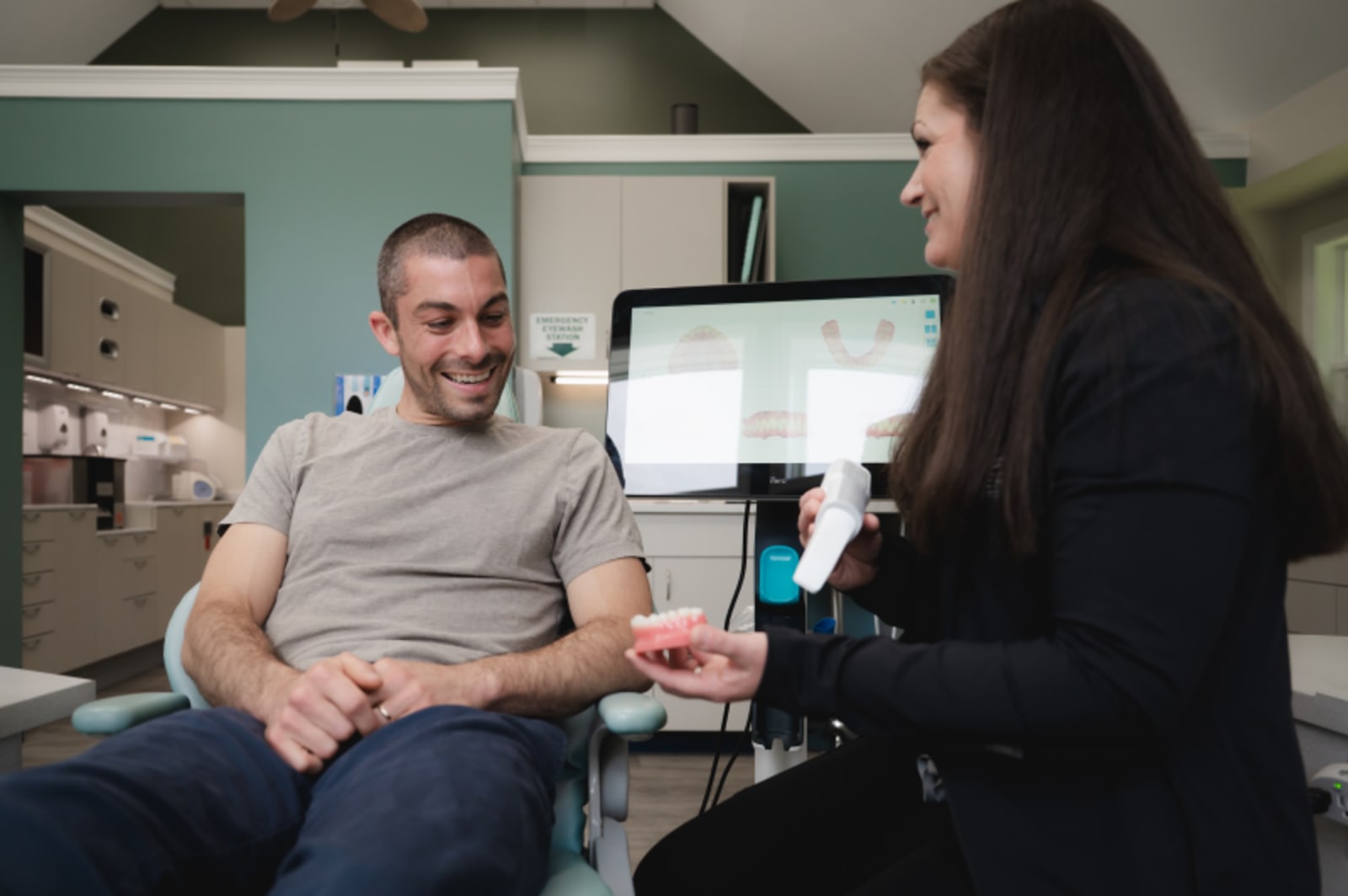
1. A full diagnostic consultation
This isn't a quick look and a quote. We take digital records, including gunk-free iTero digital impressions instead of goopy trays, plus X-rays and 3D imaging when your case calls for it. Dr. Hernandez looks at how your teeth fit together, how your jaw moves, and what has shifted over the years. Adult mouths carry history: old fillings, crowns, a tooth pulled years ago, gums that need extra attention. All of that shapes your plan.
2. Your options, side by side
You'll hear what's possible with aligners, what's possible with braces, and where the two differ for your specific case. If one approach will get you a more stable result, we'll say so and explain why. You'll also get the full fee and the timeline at this visit, not three appointments later.
3. Getting started
For Invisalign, your scan goes to the lab and your first trays arrive within a few weeks. For braces, we bond your brackets in one appointment using a precise, efficient technique that keeps chair time short while placing each bracket accurately.
4. Check-ins along the way
Visits are usually every six to ten weeks and tend to be short. We check your progress, make any adjustments, hand off your next aligners if needed, and tell you where you stand in the plan.
5. Retainers
Once your teeth settle into their final positions, we fit your retainers at a dedicated appointment and walk you through your wear schedule: full-time at first, then just nights going forward. A couple of short follow-ups confirm everything is holding.
What You Actually Get Out of It
- Brushing and flossing get easier. Crowded, overlapping teeth trap plaque in spots floss can't reach, so straightening them makes your daily routine simpler and helps protect your gums.
- Your bite stops wearing unevenly. When certain teeth take more pressure than they should, it adds up over time. Correcting your bite spreads that load the way it was designed to work.
- You stop hiding your smile. Closed-lip photos and covering your mouth in meetings get old. Whether you go with braces or Invisalign, that's exactly what we're here to change.
- Future dental work goes more smoothly. If a crown, bridge, or implant is in your future, moving teeth into good position first gives your dentist the room to do it well.
- The result is built to hold. We plan for long-term stability rather than teeth that simply look straight on day one, and Dr. Hernandez walks you through that plan at your first visit.
Is This Right for You?
Adult orthodontics fits a lot of situations, and most of them start the same way, either something that was never treated, or something that shifted slowly enough that you stopped noticing until you did.
- Crowding or overlap that makes brushing and flossing a chore
- Gaps that have opened up over the years
- A bite your dentist has mentioned is wearing your teeth unevenly
- Teeth that shifted after you stopped wearing a retainer years ago
- Alignment you've quietly disliked for a long time and finally want handled
A few things need to be sorted before we move teeth. Active gum disease or untreated cavities have to be handled by your general dentist first, because moving teeth through an unhealthy foundation isn't safe. Heavy grinding, missing teeth, or a jaw that's noticeably off don't rule you out, but they do change the plan. In cases where aligners alone can't get you the result you need, braces typically can.
Timeline and What to Expect
Most adult cases take about one to two years. Simpler cases wrap up faster, and more complex bite corrections take a little longer. Your exact timeline comes from your records at that first visit.
The consultation itself is about an hour. Getting started is usually just one appointment, whether that means placing braces or handing off your first set of aligners.
After that, check-ins are short and spread out, so most working adults are only coming in a handful of times a year.
The first week is the adjustment period. Your teeth may feel a little tender, and if you're in aligners, speech can feel slightly off for a day or two before it settles.
When active treatment is done, we fit your retainers and schedule a couple of short follow-ups to make sure everything is holding.
Getting Ready, and Caring for Your Teeth Along the Way
Before you start, get a cleaning and take care of any unfinished dental work. If your schedule has a busy stretch coming, just let us know and we'll time your start around it. Bring your insurance information to the consultation so we can check your benefits while you're there.
A few habits during treatment will make a real difference in how smoothly things go:
- With aligners: plan to wear them 20 to 22 hours a day. Take them out to eat and to drink anything but water, brush before they go back in, and keep a small travel kit in your bag or car.
- With braces: brush after meals, use a floss threader (a small tool that helps you floss around the wire) or a water flosser, and go easy on hard and sticky foods. Nuts, ice, and caramel are the usual culprits behind a loose bracket.
- Everyone: keep your regular cleanings with your general dentist, because orthodontic care doesn't replace those visits.
Once treatment wraps up, retainers are what keep your results in place. You'll wear them full-time at first and then just at night going forward. Teeth that have been moved want to drift back, and a retainer is a small nightly habit that protects everything you worked for.
Cost, Insurance, and Paying for It
What you pay depends on your case: how much movement is needed, whether you choose aligners or braces, and how long you'll be in treatment.
At the consultation, we'll give you the full fee in one number rather than sharing it in pieces over multiple visits.
Our fees are all-inclusive, meaning appointments, adjustments, and retainers are all covered in that number. Many dental insurance plans include an orthodontic benefit, basically a set dollar amount toward treatment, and we'll help you check yours before you decide anything.
We also offer financing so the cost spreads out over time. If the quote we give you doesn't fit your budget, let us know because there's often more than one way to get you a healthy result, and we'll always talk you through your options honestly.
Why Adults Choose Us
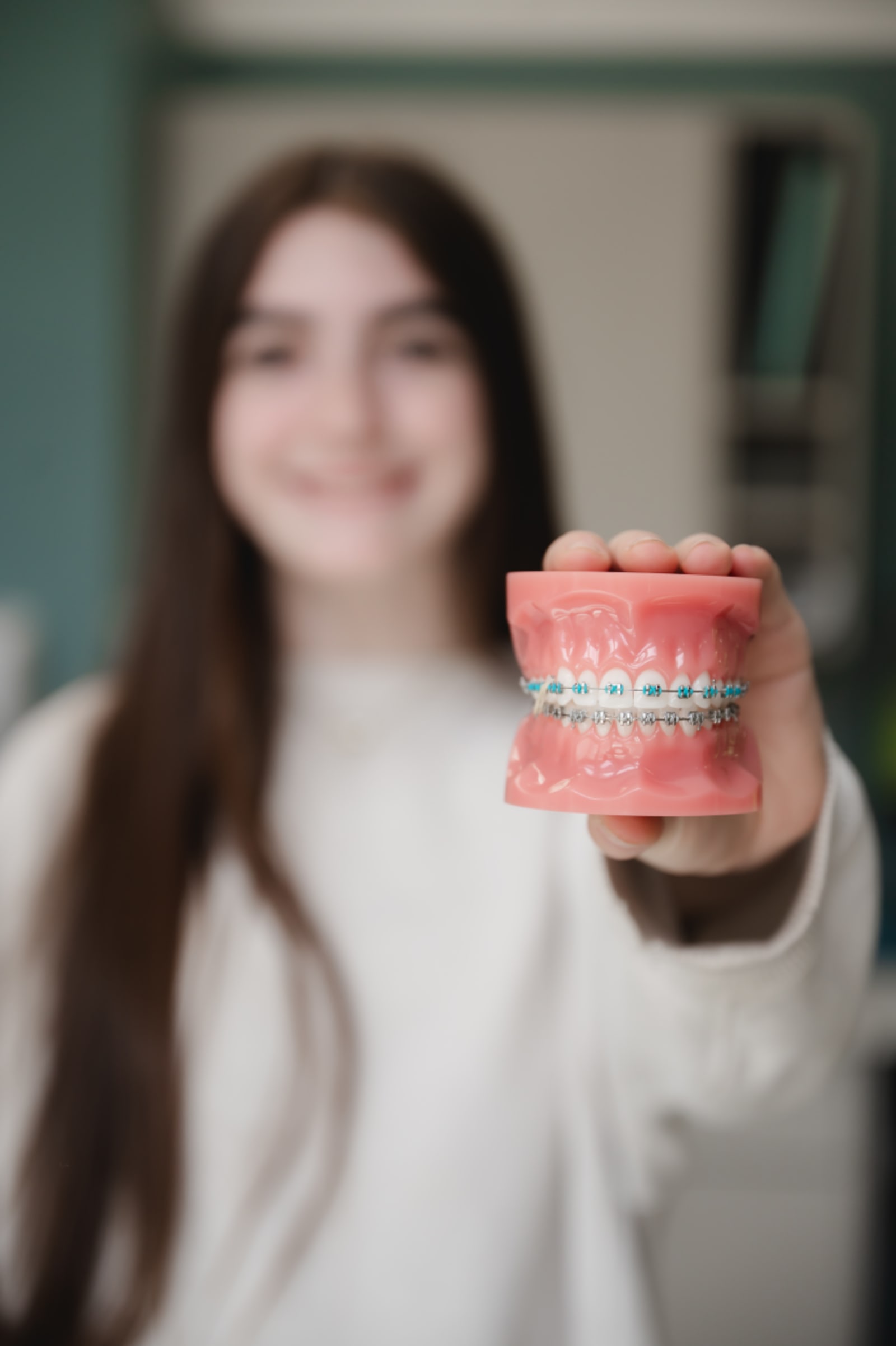
Seeing a specialist matters, and it shapes everything from your first exam to your final result. Dr. Emilio Hernandez earned his doctorate at the University of Kentucky, where he received the Clinical Achievement Award for Excellence in Restorative Dentistry. He spent four years as a general dentist in Hawaii, then taught full-time at the NYU dental residency program, then completed a three-year orthodontic specialty program at Nova Southeastern University.
That general-dentistry background is a genuine advantage with adult patients, because existing crowns, fillings, and older dental work all factor into how we plan your treatment.
A few other things adults across Merrimack, New Boston, and the surrounding towns tell us they appreciate:
- We use a fully digital workflow, which means no goopy impression trays and fewer, shorter visits overall.
- We offer braces, clear braces, and Invisalign, and we recommend whichever fits your case rather than defaulting to what we happen to offer most.
- If you've been putting this off for fifteen years, that's completely fine. Our consultations are judgment-free and you won't hear a word about the wait from us.
- You'll see the same doctor and have the same records at both offices, so switching locations mid-treatment is never a problem.
- We genuinely try to keep things light around here because a little laughter makes the whole experience easier for everyone.
Frequently Asked Questions
Am I too old for orthodontic treatment?
Not at all. Teeth move at any age as long as the bone and gums supporting them are healthy. Adult treatment can take a little longer than teen treatment because adult bone shifts more slowly, but the results are just as real.
Will people at work notice?
With Invisalign, usually not. The trays are thin and clear, and you take them out to eat. Clear braces with tooth-colored brackets are also easy to miss at a normal talking distance. If staying low-profile matters to you, just tell us at the consultation and we'll build the plan around that.
Invisalign or braces: which one is actually better for adults?
There isn't a single answer that works for everyone. Aligners are removable and discreet, but they only work the hours they're in your mouth. Because braces are fixed in place, they work around the clock without any reminders. More complex bite issues sometimes call for braces. Your records from the consultation will make the right call much clearer than any general comparison can.
Can my regular dentist just do this instead?
Some general dentists do offer aligners. The difference comes down to training. An orthodontist completes an extra multi-year residency focused entirely on tooth movement and bite correction. If your bite is involved, not just how your front teeth look, a specialist gives you a much fuller picture of what's actually going on. That's exactly the kind of thorough review Dr. Hernandez does at the first visit.
Does it hurt?
You'll likely feel some soreness for a few days after you start and after each adjustment or new aligner set. It's more of a pressure feeling than real pain, and over-the-counter pain relief handles it for most people. It fades quickly.
What if I had braces as a teenager and my teeth shifted back?
This is more common than most people realize, and it's usually straightforward to treat. Cases like this are often shorter and simpler than starting from scratch. We'll look at what moved and why, then build a retainer plan so it doesn't happen again.
Your Stunning Smile Awaits
When you come in for your consultation, Dr. Hernandez reviews your actual bite and walks you through what your treatment would look like, how long it would take, and what it would cost. You leave with a clear picture and plenty of time to decide.
Want to read up first? Learn more about braces, see how Invisalign compares, or get to know Dr. Hernandez and our team.
Call (603) 424-1199 to set up your first visit at whichever office works better for you:
- New Boston: 52 High Street, New Boston, NH 03070
- Merrimack: 27 Loop Rd, Merrimack, NH 03054
We'd love to meet you.
Your stunning smile awaits!
Call 603-424-1199 or request an appointment below to set up your first visit. We’ll be in touch soon.
