
A Financial Guide to Orthodontic Treatments for Families

Orthodontic costs in New Hampshire vary by thousands of dollars, and no one can give you a real number until they've actually looked at your child's teeth. But you can walk into that consultation already informed, knowing what drives the price, what your insurance may cover, and what payment options are available.
Dr. Hernandez and the team at River Orthodontics put this guide together for families across Merrimack, New Boston, and surrounding towns. It covers treatment types, honest cost ranges, insurance basics, payment plans, and the right questions to ask before committing to anything. Read straight through or jump to the part that matters most right now.
Ready to get real numbers for your family? Call (603) 424-1199 to schedule a free consultation at our Merrimack or New Boston office.
Jump to What You Need
We cover a lot of ground here. Read straight through or skip to the part that matters most right now.
- Recognizing the Need: signs it's time for an evaluation
- Getting Diagnosed: what happens at a first visit and how your fee gets built
- The Options: braces, aligners, and how they compare
- The Money: cost ranges, insurance, and payment plans
- Age and Timing: how treatment differs for kids, teens, and adults
- Daily Life and Aftercare: what to expect during and after treatment
- The Long View: the value of a corrected bite over time
- Choosing Well: questions to ask before you commit
Is It Time for an Orthodontic Evaluation? Here's What to Look For
Orthodontics is about more than a straighter smile. The real goal is a bite that fits together properly, cleans easily, and holds up over time. These are the issues we see most often:
- Crowding: not enough room in the jaw, so teeth overlap or twist. The most common reason families come in.
- Spacing: gaps between teeth from a missing tooth or a size mismatch between teeth and jaw.
- Overbite: upper front teeth sitting too far forward, which can wear down the lowers over time.
- Underbite: lower teeth sitting in front of the uppers, usually a jaw growth pattern rather than just tooth position.
- Crossbite: upper teeth landing inside the lower ones, which can push the jaw sideways when closing.
- Open Bite: front teeth that don't touch when the back teeth are closed, making it hard to bite into food cleanly.
Most of these come down to inherited jaw and tooth size, with habits like thumb sucking or mouth breathing playing a role. None of it is anyone's fault, and we never approach it that way.
Signs in Children
The American Association of Orthodontists recommends a first check around age seven. That visit is usually just a look and a plan, nothing more. Come in sooner if you notice early or late loss of baby teeth, trouble chewing, a jaw that shifts to one side, or visible crowding as permanent teeth arrive.
Signs in Teens
By the early teen years, most permanent teeth are in and concerns are easy to spot: crowding, front teeth that stick out, a bite that looks off, or a child who has started covering their mouth when they laugh. Ages nine through fifteen are the ideal window because growth is still on your side.
Signs in Adults
Crowding that has slowly worsened, a bite that makes certain teeth feel sore, jaw clicking, or a dentist mentioning that a crown would last longer with a better bite. Adults come in for all of these, and plenty simply because they've wanted it for years.
How We Get the Full Picture Before Recommending Anything
The Exam Itself
Dr. Hernandez checks how your teeth fit together, how your jaw moves, and how everything lines up with your lips and face. He'll ask about habits, breathing, jaw clicking, and any prior dental work. A lot of what he learns comes from watching your mouth in motion.
Scans Instead of Goopy Trays
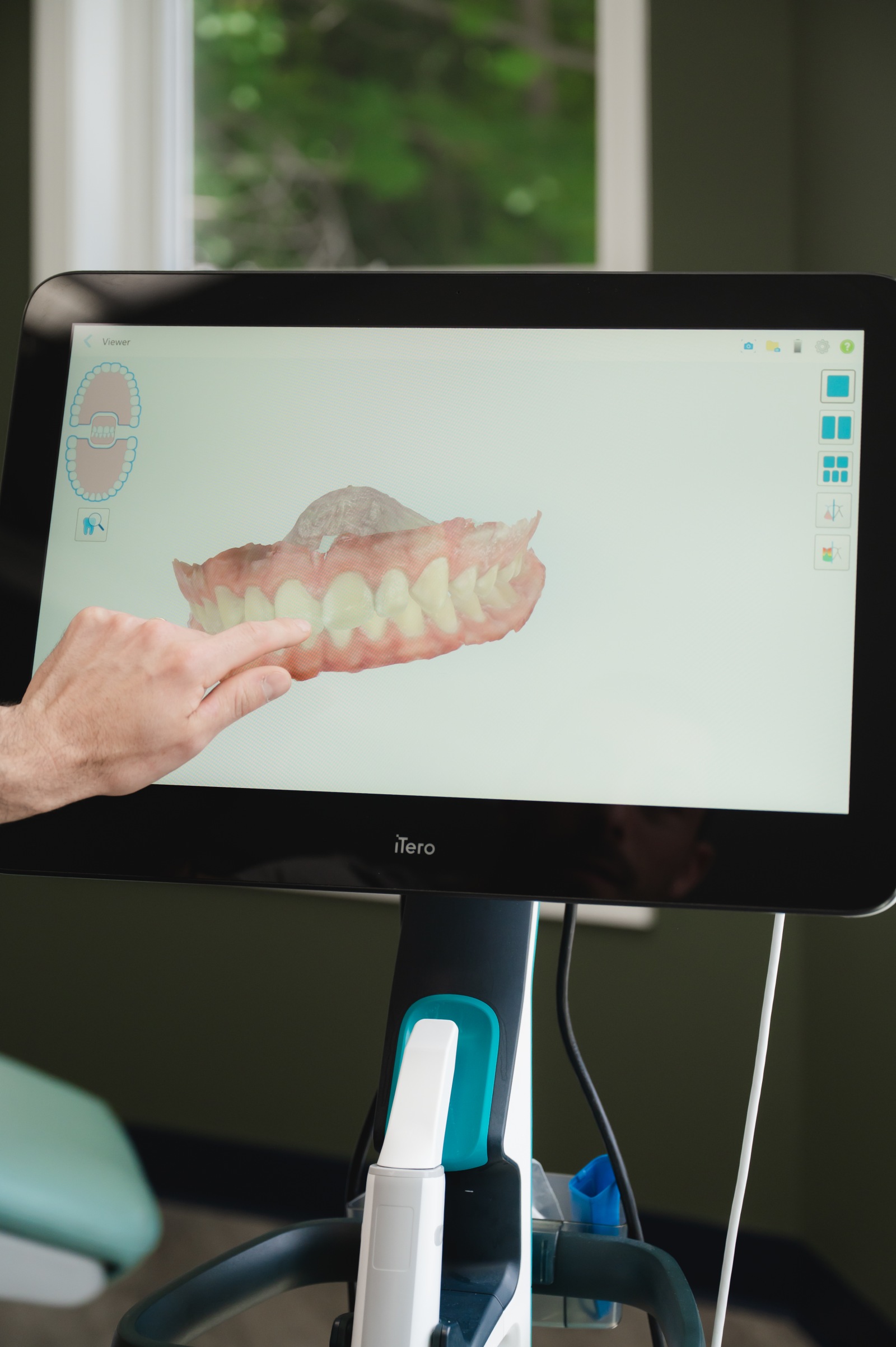
We use an iTero scanner, a small handheld wand that builds a 3D model of your teeth on screen in minutes. No trays, no putty, no gagging. You can actually see your own bite rotating on the monitor while we walk you through it.
X-Rays That Show the Full Picture
Digital X-rays show your roots, developing teeth, and surrounding bone. For complex cases, cone beam imaging adds a 3D view of impacted teeth, jaw position, and airway. Photos of your face and teeth complete the picture.
How Your Plan and Your Fee Get Built
All of that tells us what needs to move and how far, which shapes whether braces or Invisalign makes more sense, how long treatment will take, and whether anything extra is needed, like an expander or a referral to an oral surgeon. A simple case costs less than a complex one, and we can't give you an honest number until we've seen your records. You'll have the full cost and payment options before anything begins.
Braces vs. Aligners: The Honest Side-by-Side
Price
The two are closer than most families expect. Aligners often run slightly higher, but case complexity and treatment length move the number far more than which appliance you pick.
Treatment Time
Both options run roughly 12 to 30 months. Aligners can finish faster for mild crowding, while braces tend to be more efficient for bigger rotations and bite corrections. The most common reason aligner treatment runs longer than expected is simply not wearing the trays enough hours each day.
Discipline Required
Braces work around the clock with no effort on your part. Aligners need 20 to 22 hours of daily wear and come out for every meal and any drink besides water. For a teen who tends to lose things, that's worth thinking about.
Comfort and Lifestyle
Both feel tender for a few days after an adjustment or a new tray. Braces can irritate cheeks at first, but orthodontic wax takes care of that quickly. Aligners skip that issue, though you will want to carry a toothbrush with you since they come out for every meal.
What Each Handles Best
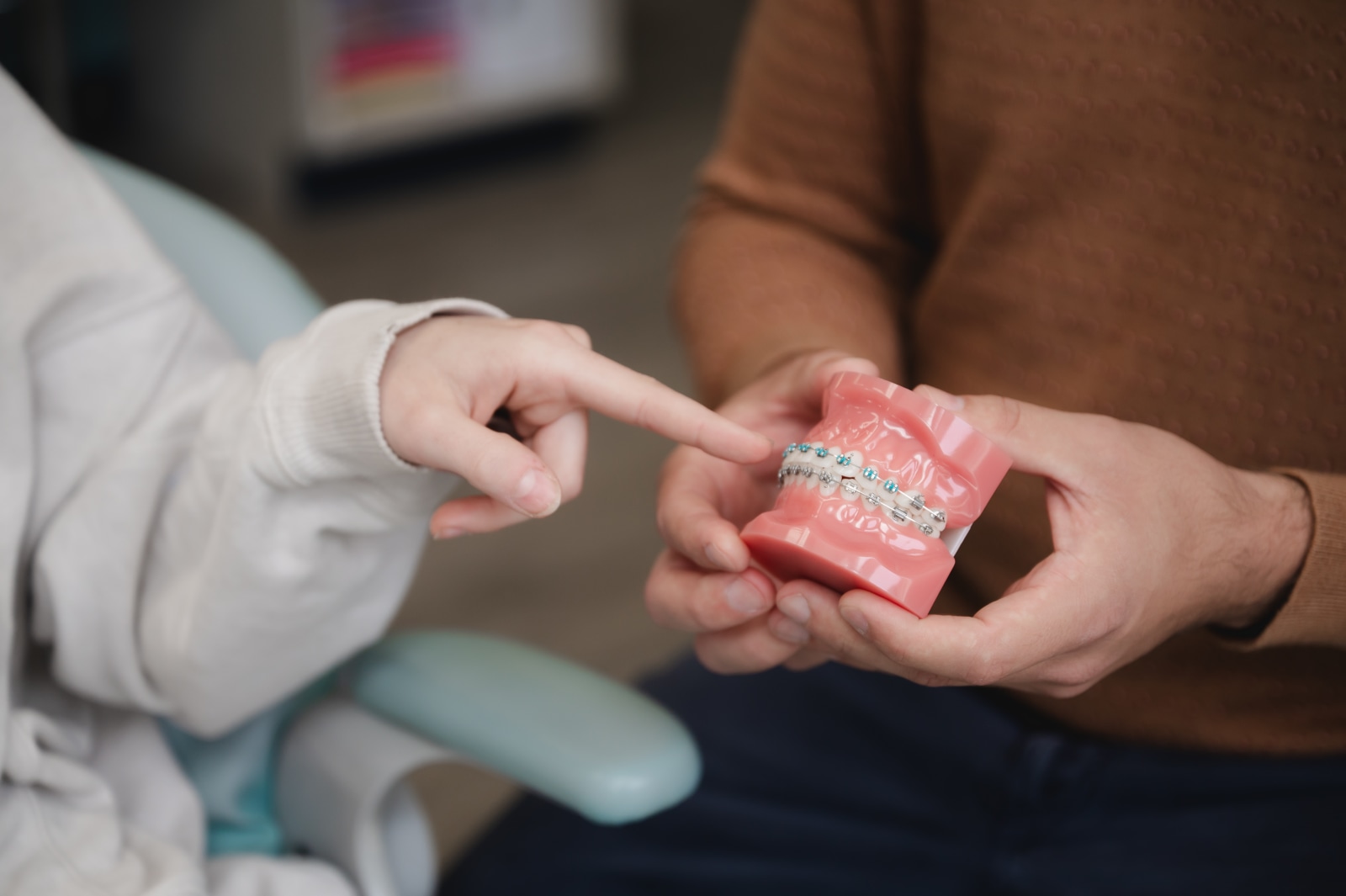
Aligners work well for mild to moderate crowding, spacing, and many bite corrections, as long as they are worn consistently. Braces are generally more reliable for severe crowding, rotated or impacted teeth, and larger jaw discrepancies. The right choice comes down to what your teeth actually need. You can read more about traditional braces and Invisalign clear aligners before your consultation with Dr. Hernandez.
Costs Hiding in the Details
- Replacement Trays: a lost or damaged aligner set usually carries a fee. Ask what it is.
- Refinements: extra trays added mid-treatment to fine-tune results. Ask whether they are included or billed separately.
- Attachments: small tooth-colored dots bonded to teeth that help aligners grip and move them more precisely. Usually part of the fee.
- Broken Brackets: routine repairs are typically covered, but repeated breakage can add visits and stretch out treatment.
The Honest Numbers: What Families in NH Typically Pay
Comprehensive treatment in this region generally runs between $3,000 and $8,000, with most families landing in the $5,000 to $6,000 range. Limited treatment, like correcting a few front teeth or a short early-treatment phase, often falls between $1,500 and $3,500. These are planning ranges, not quotes. Your actual number comes from your records, and you'll have it before you leave your consultation.
A few things shape where your case lands:
- Treatment Type: limited or comprehensive, brackets and wires or removable aligners, metal, ceramic, or lingual. Each works differently and carries a different price point.
- Case Complexity: mild crowding is a different job from correcting a jaw misalignment with a tooth stuck under the gumline.
- Treatment Length: longer treatment means more appointments, materials, and chair time.
- Extra Appliances: expanders, space maintainers, and similar additions have their own costs.
- Coordination with Other Providers: extractions, surgery, or restorative work are billed separately by those providers.
- Specialist vs. General Dentist: orthodontists complete two to three years of residency beyond dental school, focused entirely on tooth movement and jaw development. Dr. Hernandez completed a three-year specialty program in orthodontics and dentofacial orthopedics. General dentists can offer orthodontic treatment, but for complex cases, that specialized training makes a real difference in the plan.
It's also worth asking whether a quoted fee is all-inclusive. Ours covers the full course of treatment, including scheduled visits, routine repairs, and retainers at the end. At some practices, records, retainers, and emergency visits are separate line items, so two similar-looking quotes can end up thousands apart. Always ask what's included before you compare.
Ready to get a real number for your family? Call us or stop by either office. We're happy to talk it through before you commit to anything.
- New Boston: (603) 424-1199 | 52 High Street, New Boston, NH 03070
- Merrimack: (603) 424-1199 | 27 Loop Rd, Merrimack, NH 03054
Making Sense of Your Insurance Benefits Before Treatment Starts
Orthodontic coverage works a little differently than the rest of your dental plan. A quick call to your insurance carrier or HR department before your consultation can clear up a lot of confusion before it starts.
The Lifetime Maximum
Most plans set a lifetime orthodontic maximum: a fixed dollar amount the plan will ever pay toward treatment for that person. Unlike your regular dental benefit, it does not reset each year. Once it's used up, it's gone. Some plans set that limit per person, so if you have multiple kids, one child's treatment could use up what's available for the others.
Age Limits
Many employer plans only cover orthodontics for dependents, and that coverage often ends when a child reaches a certain age or comes off the policy. Adult coverage exists on some plans and not others, so check your own rather than assuming. If you're an adult weighing treatment, our adult orthodontics page walks through the options.
Waiting Periods
Some plans require six or twelve months of enrollment before orthodontic coverage kicks in. If you've recently changed jobs or switched carriers, that may affect when treatment begins, though it rarely needs to delay putting a plan together now.
In-Network Versus Out-of-Network
Plans distinguish between providers who have agreed to set fees with the insurer and those who haven't. What matters most is what you actually pay out of pocket, so ask your carrier how your plan handles both situations and compare that to the fee you're quoted.
Coordination of Benefits
If your child is covered under both parents' plans, one acts as the primary payer and the other as secondary. The secondary plan may pick up some of what the first one doesn't cover. The rules vary, and the two lifetime maximums don't simply add together, so bring both insurance cards to your consultation.
Questions to Ask Your Carrier
- What is my lifetime orthodontic maximum, and has any of it been used?
- Does the plan cover adults, or dependents only? Up to what age?
- Is there a waiting period, and when does it end?
- What percentage does the plan pay, and is that based on the provider's fee or a set insurance rate?
- How does coverage differ in-network versus out-of-network?
- How is the benefit paid out: lump sum, installments, or reimbursement?
Bring your answers to your consultation and we'll help make sense of what it all means for your family's situation.
No Insurance? Here's How Families Make It Work

In-House Monthly Payment Plans
This is the most common route families take. You put down an initial amount and spread the rest across your months of treatment, with the last payment due right around when the braces come off. Our plans are interest-free, so you pay exactly what we quoted, nothing more. We work with you on the down payment and monthly amount so it fits your budget. If something changes along the way, just talk to us rather than getting behind on payments. Dr. Hernandez and the team will walk you through every option before you commit to anything.
HSA and FSA Dollars
Orthodontic treatment is typically an eligible expense for both Health Savings Accounts (HSA) and Flexible Spending Accounts (FSA), which means you can pay with pre-tax dollars and make your money go further. One timing note: FSA funds are usually use-it-or-lose-it at the end of your plan year, so starting before that deadline can help. HSA funds roll over year after year, which makes them a solid option if you're planning ahead.
Third-Party Healthcare Financing
Outside lenders that specialize in medical and dental costs can finance your treatment, sometimes with a no-interest period upfront. Rates, terms, and approval depend on the lender and your credit. Before signing, make sure you understand what happens when that period ends, because surprise interest charges have caught a lot of families off guard.
Other Sources Worth Checking
- Employer Benefits: some plans include dental discount programs you can use independently.
- NH Medicaid: covers orthodontic treatment for children when there is a medical need. This is a narrower standard than cosmetic concern, but your orthodontist can tell you whether your child's case may qualify.
- Timing Across Tax Years: splitting a down payment across December and January can let you draw from two separate FSA plan years.
Your Retainer Is Part of the Investment
Teeth drift. That's true for everyone, treated or not. A retainer protects the result you just paid for, and skipping it is the single most expensive mistake in orthodontics.
Fixed Retainers
A thin wire bonded behind your front teeth, usually on the bottom. It does its job without any effort on your part. You do need to floss carefully around it, and it can come loose over the years and need to be reattached.
Removable Retainers
Clear trays that look like aligners, or the classic wire-and-plastic style. Simple to clean, but also simple to misplace. The usual schedule is full-time wear at first, then nights only, then nights indefinitely. Wearing a retainer a few nights a week in your forties is completely normal.
What Retention Costs
Your first set of retainers is included in your treatment fee here, which is not the case everywhere, so ask about it wherever you consult. Replacements do carry a cost, and retainers have a way of ending up in napkins, getting chewed by dogs, or lost on vacation, so it is worth asking about replacement costs up front. A replacement retainer is a modest expense. Retreatment after years without one is not.
Straight Teeth Cost Less to Own Than Crooked Ones
Orthodontic treatment is one cost you can plan for now, rather than a series of costs you didn't see coming later. Here's what that looks like in practice.
Crowded and overlapping teeth are harder to clean. Floss can't reach where teeth sit on top of each other, plaque builds up, and the long-term bill shows up as fillings, gum treatment, and sometimes bone loss around specific teeth. A bite that puts uneven pressure on your teeth wears down enamel, chips edges, and shortens the life of crowns and fillings. Straightening addresses the root cause; repairing the damage without it just means doing it again.
Function matters too. A bite that fits together properly chews efficiently, and jaw joints that work evenly tend to cause fewer problems over time. Narrow upper jaws and certain bite patterns can also affect breathing and airway, which is part of why we look at more than just tooth position at your first visit.
Then there's the part that doesn't show up on a spreadsheet. Adults tend to describe the change in quieter terms. They stop angling away from cameras. They laugh without a hand coming up. A smile you're not self-conscious about is a smile doing its job.
Waiting isn't always wrong. Sometimes a child isn't ready, or the budget genuinely needs a year. But waiting while a crossbite shifts a growing jaw, or while a stuck tooth damages the root of its neighbor, costs more than money. The next section covers the questions worth asking before you decide.
What to Ask Any Orthodontist Before You Say Yes
The families who feel most confident about their choice are almost always the ones who asked plenty of questions upfront. Bring this list to any consultation, ours included.
About the Fee
- What's included in the fee: records, X-rays, all adjustment visits, emergency repairs, retainers?
- What gets billed separately, and what does each item cost?
- If treatment takes longer than expected, does the price go up?
- What does a replacement retainer or aligner cost?
- Is there a discount for paying in full, or for treating more than one family member?
About Payment
- How much is the down payment, and is there any flexibility?
- Is in-house financing interest-free, and does it require a credit check?
- Will you check my insurance benefits and bill the carrier directly?
- What happens if my financial situation changes during treatment?
About the Treatment and the Provider
- Why this appliance for my case, and what other options were considered?
- How long will treatment take, and what could make it run longer?
- Will I see the orthodontist at my appointments, or mostly an assistant?
- Is the doctor a board-certified orthodontic specialist with residency training?
- Can I see before-and-after photos from cases similar to mine?
One Appointment Turns All of This Into a Real Plan
All of the above is a starting point. Your case is what actually matters, and it takes about an hour to see the full picture. At your consultation, Dr. Hernandez will walk you through what he sees on screen, and you'll leave with a complete treatment plan, a clear fee, and a monthly number that fits your budget. Your first visit is on us, and nothing gets decided that day unless you're ready.
Call (603) 424-1199 and we'll find you a time at either office:
- New Boston: 52 High Street, New Boston, NH 03070
- Merrimack: 27 Loop Rd, Merrimack, NH 03054
Bring your questions, and bring the kid who swears they don't need braces. Your stunning smile awaits.
Your stunning smile awaits!
Call 603-424-1199 or request an appointment below to set up your first visit. We’ll be in touch soon.
